Greece’s short-term rental market continues to grow, offering property owners an excellent opportunity to generate income through platforms like Airbnb and Booking.com. However, as the industry matures, new compliance rules are being introduced to ensure guest safety, property standards, and fair competition.
Starting in 2026, every property offered for short-term rental must meet a series of legal, technical, and safety requirements. These regulations are designed not only to protect guests but also to safeguard owners from liability and administrative penalties.
1. Registration and Identification
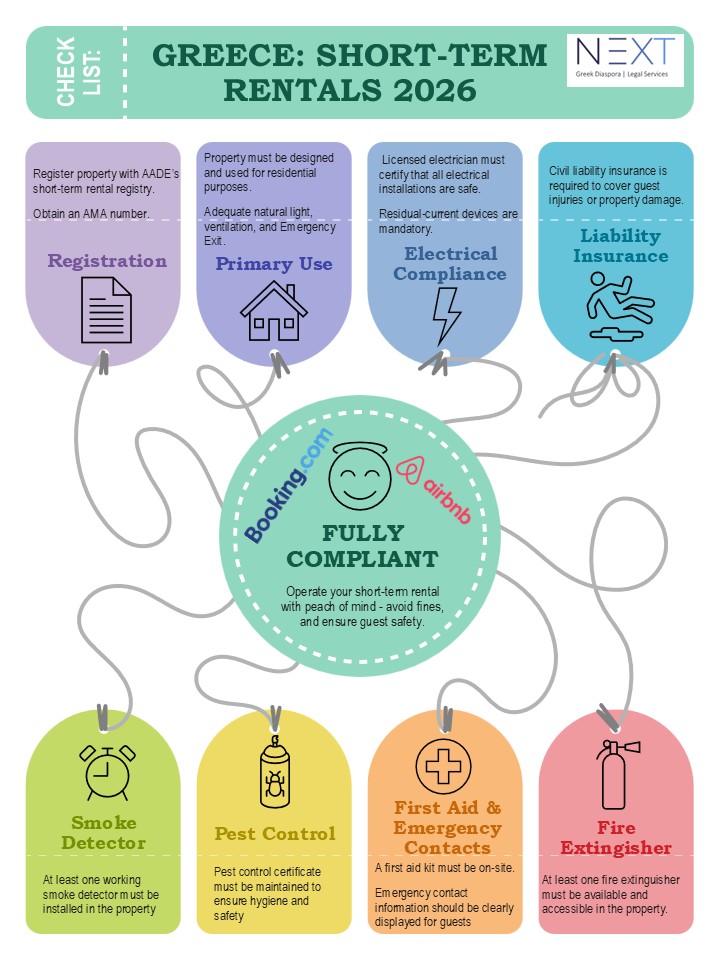
Every property used for short-term rental must be registered with AADE’s Short-Term Rental Registry. Upon registration, you will receive an AMA (Property Registration Number), which must appear clearly in all advertisements and listings. This step ensures your activity is recognised as legitimate and tax-compliant under Greek law.
2. Proper Use and Design Standards
Your property must be intended and used for residential purposes. This means it should meet fundamental habitability criteria such as:
- Sufficient natural light and ventilation
- A clearly marked and accessible emergency exit
- Compliance with local building and zoning codes
Properties not meeting these standards risk rejection during inspections or, worse, fines and suspension of rental activity.
3. Electrical Safety and Certification
A licensed electrician must certify that all electrical installations are safe and compliant with Greek electrical codes. Additionally, residual-current devices (RCDs) — which protect against electric shocks — are mandatory. Electrical safety checks must be conducted periodically, and certificates should be kept on file for presentation to authorities if required.
4. Liability Insurance
From 2026 onwards, it is obligatory for all short-term rental operators to maintain civil liability insurance. This insurance covers guest injuries or property damage that may occur during their stay. It’s an essential safeguard that not only meets legal obligations but also enhances trust and professionalism.
5. Health and Safety Essentials
To ensure guest well-being, several minimum safety installations are required:
- Smoke Detector: At least one functional smoke detector must be installed in the property.
- Fire Extinguisher: A fire extinguisher must be available and easily accessible.
- First Aid Kit: A stocked first aid kit must be present on-site.
- Emergency Contact Information: Displayed prominently for guests to access in case of emergencies.
- Pest Control Certificate: A valid pest control certificate must be maintained to ensure hygiene and safety standards.
These basic measures not only fulfil legal obligations but also help create a safe and welcoming environment for guests — a key factor in positive reviews and repeat bookings.
6. Why Compliance Matters
Failure to comply with short-term rental laws can result in significant fines, delisting from major platforms, or even temporary bans. Beyond avoiding penalties, compliance also protects your investment, your reputation, and the guests who choose your property.
How NΞXT Can Help
At NΞXT, we simplify the entire process for property owners in Greece and abroad. Whether you’re just starting or already renting, our team provides end-to-end support to make sure you meet every requirement on the checklist.
We can assist you with:
- Registering your property with AADE and obtaining your AMA number
- Coordinating safety inspections and electrical certifications
- Reviewing or arranging liability insurance coverage
- Handling tax compliance and short-term rental income declarations
- Ensuring all safety and legal documentation is in place before guests arrive
Our goal is simple — to give you peace of mind knowing your property is legally compliant, professionally managed, and ready to welcome guests with confidence.
Ready to rent your property the right way?
Get in touch with NΞXT today to review your property’s compliance status and receive personalized guidance for 2026.